Issue 08: Harmonizing Hormones: A Journey to Balance
Harmonizing Hormones: A Journey to Balance
By Vinitha
When I was growing up, the word “hormonal” often carried a negative connotation, synonymous with mood swings, irritability, and emotional turbulence. However, as I’ve matured and grown more in tune with my body, I’ve embraced the intricacies of my menstrual cycle and womanhood. I’ve come to view hormones as the beautiful elements of life’s seasons. Our hormonal fluctuations are similar to nature’s ever-changing patterns, and they play a crucial role in our physical, emotional, and reproductive well-being.
In this article, we will explore the significance of hormonal balance in our lives, and insights into achieving it.
Understanding the Key Hormonal Players
Hormones are the body’s chemical messengers, synthesized by various glands and tissues. They help regulate processes vital to our overall health, such as managing hunger, sleep, stress and our menstrual cycle. When discussing female hormonal balance, three key players are at the forefront:
1. Estrogen: Often regarded as the primary female sex hormone, estrogen is predominantly produced in the ovaries. Its roles include regulating the timing of the menstrual cycle, supporting the development of the egg, and preparing the uterine lining for potential fertilization. Estrogen levels peak during the first half of the menstrual cycle but drop after menstruation.
2. Progesterone: Another crucial female sex hormone, progesterone is mainly produced in the ovaries and, to a lesser extent, in the adrenal glands. Its responsibilities involve preparing the uterus for a fertilized egg’s implantation and sustaining a pregnancy. Progesterone levels rise during the second half of the menstrual cycle but decrease if fertilization doesn’t occur.
3. Testosterone: While typically associated with males, females also produce testosterone, though in smaller amounts. It contributes to libido and helps maintain muscle and bone mass.
Recognizing Hormonal Imbalance
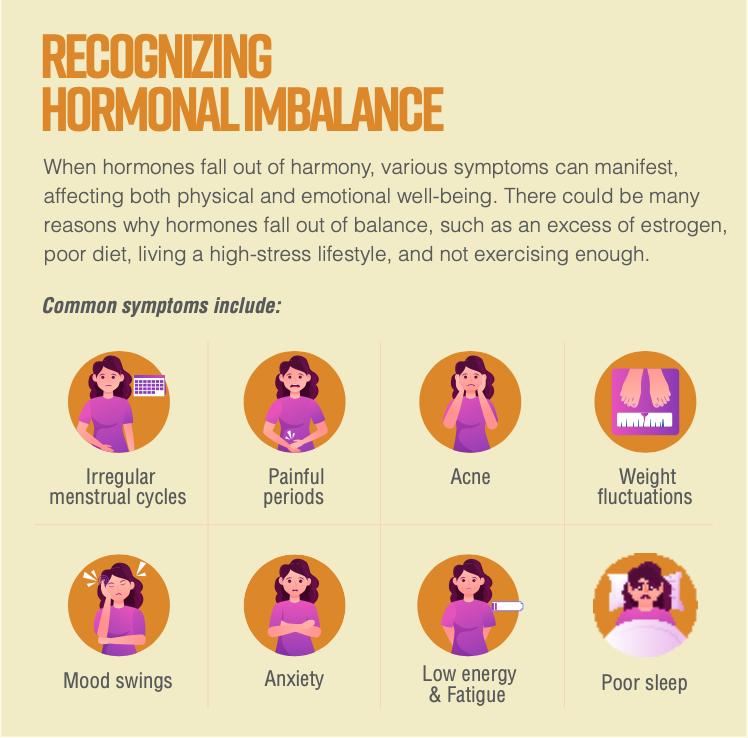
When hormones fall out of harmony, various symptoms can manifest, affecting both physical and emotional well-being. There could be many reasons why hormones fall out of balance, such as an excess of estrogen, poor diet, living a high-stress lifestyle, and not exercising enough.
Common symptoms include:
Irregular menstrual cycles
Painful periods
Acne
Weight fluctuations
Mood swings
Anxiety
Fatigue
Low energy
Poor sleep
Reclaiming Hormonal Balance
If you’re experiencing hormonal imbalance, there’s no need to worry. With commitment and mindful choices, you can restore equilibrium. Here are four key areas to focus on:
1. Food: Nourishing your body with the right foods is crucial in achieving hormonal balance. Highly processed and sugary foods can disrupt hormones, leading to elevated estrogen and cortisol levels. Opt for balanced meals made with whole foods, protein, fibre, and healthy fats. Incorporate fermented foods and cruciferous vegetables which are great for maintaining a healthy gut. Make sure to also eat protein with each meal, and add nutrient-dense seeds such as pumpkin and flax seeds.
2. Exercise: Ditch the notion that intense workouts are the only path to fitness. High-intensity exercise on a regular basis can raise cortisol levels, causing chronic stress. Instead, diversify your fitness routine with yoga, pilates, leisurely walks, and weight training. Listen to your body, and adjust your exercise intensity to match your menstrual phase. For example, choose low intensity training during your menstrual phase, and high-intense weight training during your ovulatory phase.
3. Products and Chemicals: Be mindful of the products you use daily, such as body soaps, perfumes, detergents, and even makeup. Many contain xenoestrogens, substances that mimic estrogen and disrupt hormonal balance. Opt for hormone-friendly products that are fragrance-free. Additionally, avoid eating produce exposed to pesticides. Pesticides are xenoestrogens which can cause elevated levels of estrogens and throw off hormonal balance. Shop organic whenever possible or affordable, or use a plant–safe wash to thoroughly cleanse off pesticides.
4. Stress Management: The impact of chronic stress on hormonal health cannot be overstated. Modern lifestyles, filled with constant stimulation, urgency, and notifications lead to cortisol spikes, affecting hormonal balance. This can look like overeating, mood swings, having trouble sleeping, or constant sugar cravings. To start managing stress, build a personalized stress management toolkit that suits your lifestyle. For example, incorporating practices like meditation, yoga, daily walks, arts and crafts, and exposure to morning sunlight can help you ground yourself and calm your mind. By practicing self-care and stress management, you will notice your body releasing tension, getting better sleep, having less brain fog and a more stable mood.
Embrace the ebb and flow of your hormonal cycle as part of your unique journey. By nurturing your body with wholesome foods, finding joy in diverse forms of exercise, choosing hormone-friendly products, and adopting stress management rituals, you can be in sync with yourself. If you feel out of harmony, there’s no need to worry because our bodies are made to heal. With these mindful choices, you’ll not only harmonize your hormones but also enhance your overall well-being, reconnecting with the beauty of your womanhood and the rhythms of nature.
Vinisha
I’m Vinisha, a health and wellness content creator and marketer. I was born and raised in Chile and now live in the US. I’m passionate about hormonal health, creating healthy recipes and working out. In my free time you can find me at a pilates or yoga class, reading a book, on a walk in nature (preferably by water) or in the kitchen creating healthy recipes. One of my main goals is to inspire other women to gain awareness of their hormonal health and feel empowered to make the best health decisions to optimize their mood, energy and wellbeing through proper nutrition, exercise and lifestyle habits. Something that brings me joy is waking up early in the morning. I love the sounds of birds, the crisp, fresh air, and the silence to be in my own presence. I usually exercise, meditate and journal in the morning to set myself up for a successful day ahead.