Issue 06: A Labour of Love
A LABOUR OF LOVE
Is giving birth very painful?
This was the ultimate question I always wondered about since I was a little girl. Yet I must have asked my mum about it only twice, and her answer was always the same. It focused on an optimistic aspect.
The truth is, despite being aware that my maternal instincts had always been there, I spent my entire life avoiding the subject. I didn’t really want to know in case the answer scared me too much, to the point where I wouldn’t want to have kids, especially if the truth was what I thought it was.
Painful.
We avoid the question in the hope that ignorance is bliss. What happens then is that we are already setting a trap for ourselves because when it comes to childbirth, ignorance is misery. It’s when birth ends up medicated and traumatic. And honestly, having to deal with trauma while looking after a newborn is not where you want to be.
Before I even answer the question, I want to explain how birth should work, how it’s divided into three stages and how the truth is not at all what we assume it to be.
You know how your body coughs, pukes, breathes, digests, sneezes, pees, poos? Those are physiological processes that we do everyday. We’re born with those abilities and we don’t even question them, right?
Well, birth is just another physiological function. The only difference is that it’s not one we’re using daily.
But that doesn’t mean your body doesn’t know how to expel a baby. It does. It’s designed for that, it is already within you.
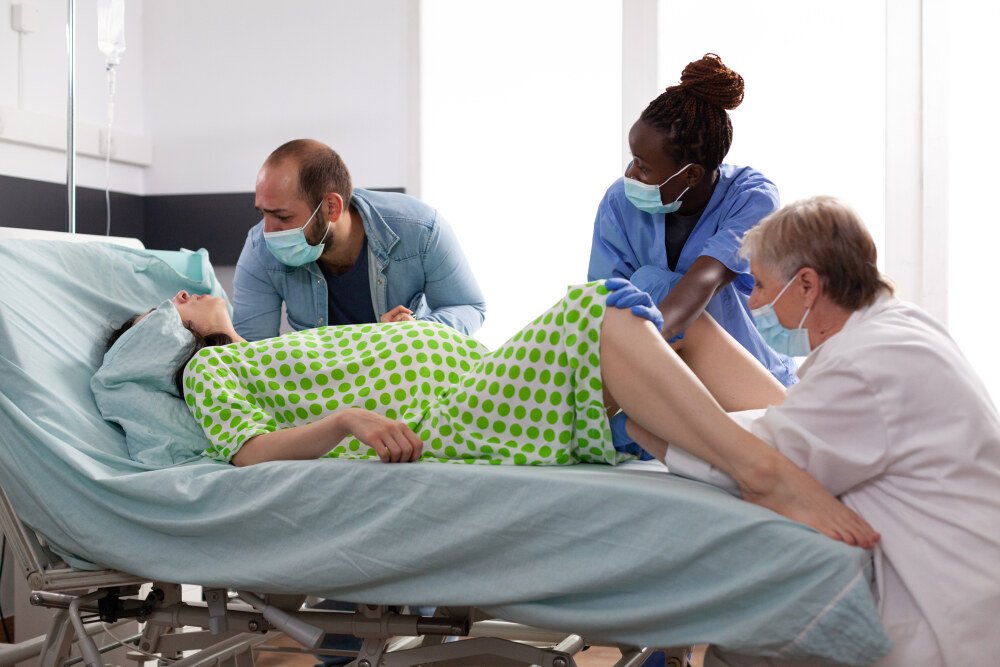
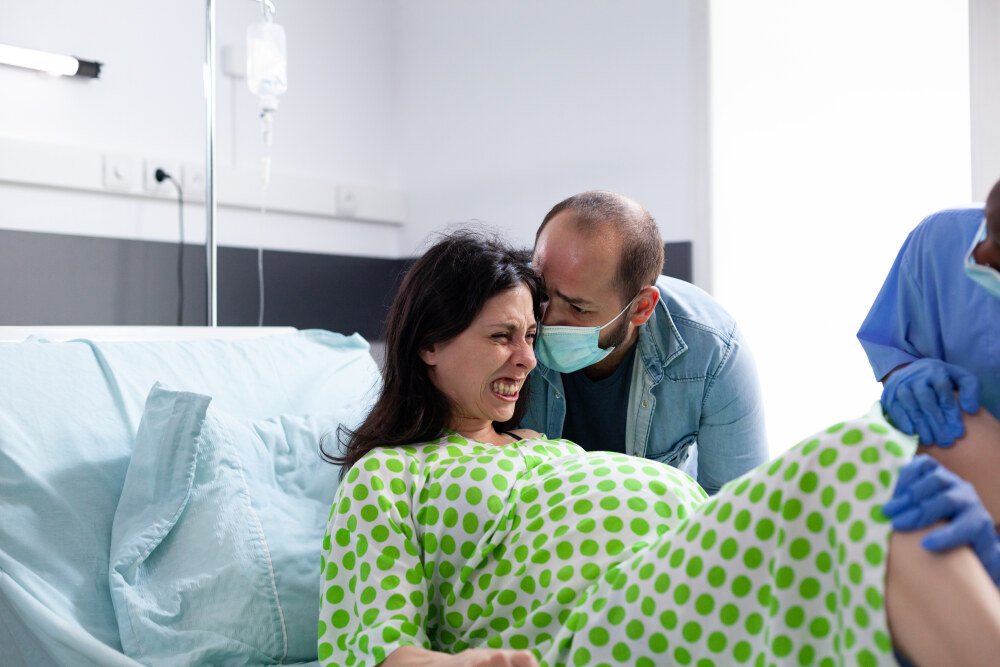
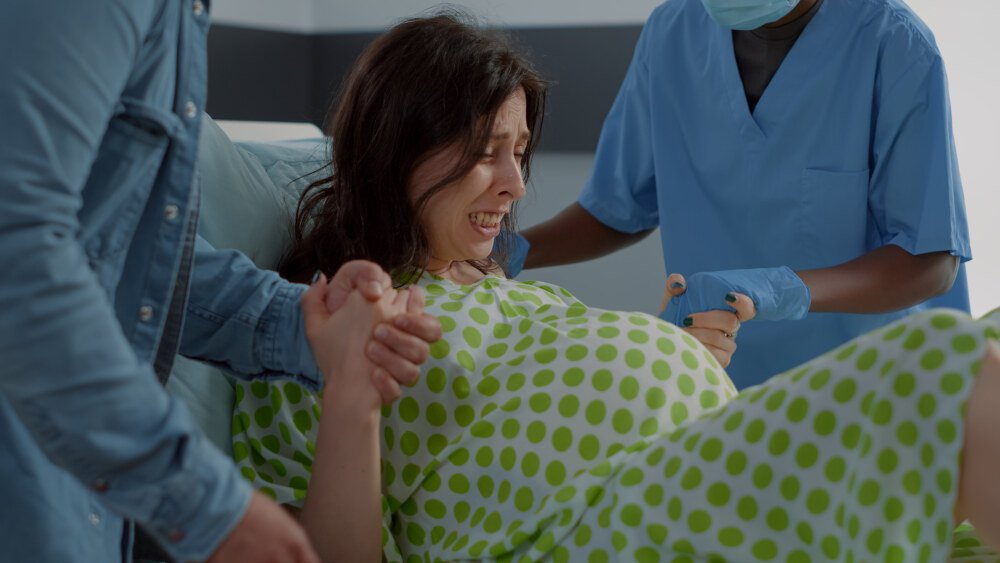
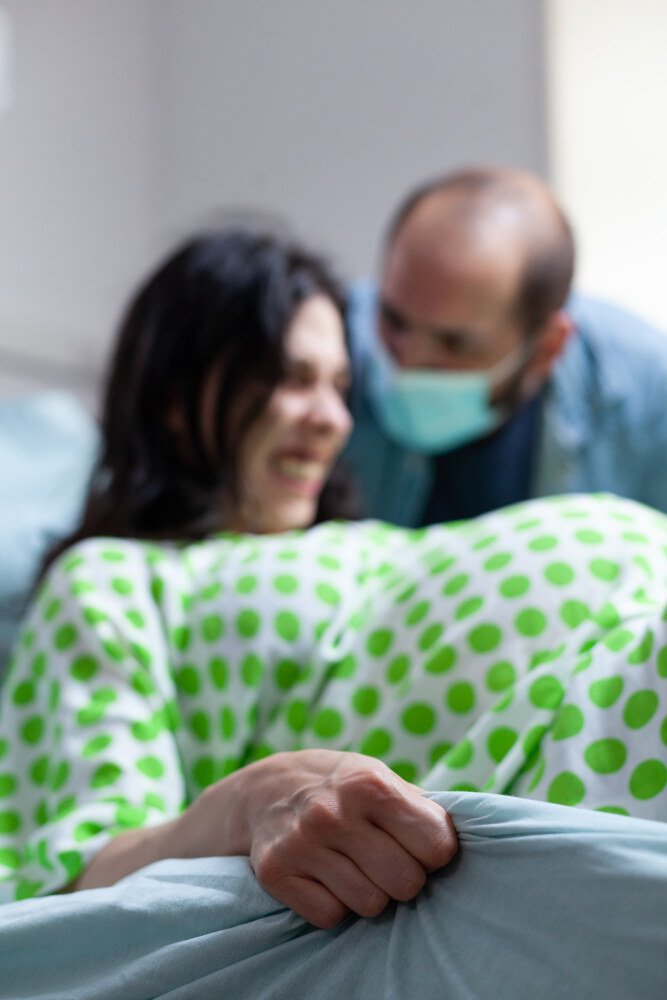
Yet, that’s unknown. Hence why we have lost our trust in it. Paired with the frantic, fearful depiction of birth on screen, it adds to our unconscious mind that it must hurt and looks like this: legs up in stirrups, screaming in excruciating pain, a doctor telling you to push to save you from agony.
Unknown is scary. It means our bodies will be in a state of alertness, flee or fight effect, in survival mode. This is your body in the sympathetic nervous system. It’s extremely important when in real danger as it releases the hormone adrenaline and boosts oxygens to your arms and legs so you can run as fast as possible. But when it comes to childbirth, it’s the worst state you can be in, because you don’t need more oxygen being pumped to your arms and legs but instead to your uterus, baby, digestive system and internal organs for your body to function efficiently.
Essentially our bodies have two nervous systems: the sympathetic and the parasympathetic nervous system.
The parasympathetic part is when we feel relaxed, safe, calm, serene and oxygen flows to our whole body replenishing all organs. The two systems can never work at the same time. You’re either in one or the other.
Therefore your state of mind will have an impact on how your body works at that moment. Being in a fearful state during birth means your body will not work as efficiently as it should. It may send a signal to the baby that it’s not a safe time to be born. It may halt or stop the process of birth if it had started. It will take longer, your body will have to work so much harder because there’s not enough oxygen being supplied where it really needs it. You’ll get tense and stressed and the baby may get distraught. It’ll make everything much more difficult because hormones are essential for how birth unfolds.
If you have more adrenaline pumped in your body, it will inhibit the first important hormone that you need for birth. Oxytocin. This is what stimulates the muscles of the uterus to contract. That’s how your body starts to open the cervix to let the baby out.
This is the first stage of labour. It’s the hardest and longest part as the cervix needs to soften and open wide from 0cm to 10cm. This is how a baby can come out from what seems like a place so small. In reality your pelvis has a really big opening but it seals shut during the entire pregnancy. It is very strong as it has to carry the weight of amniotic fluid and the weight of a growing baby. The muscles of your uterus need to work hard in opening that up. It does that gradually, with breaks in between.
The first stage of labour is divided into three parts:
The latent phase
Takes the longest from 0- 4cm.
The active phase (established labour)
5-6 cm contractions are building up and lasting a bit longer.
The transition phase
7-10 cm. At this point contractions are more clustered together with less breaks. One of the symptoms of this phase is to say things like “I can’t do it anymore”, “you did this to me”, “give me all the drugs”. This part can move much faster and means you’re so close to having the baby descend the birth canal.
That’s the second stage of birth:
The pushing phase.
If your birth has started spontaneously and you’ve been left undisturbed, uninterrupted, in low light conditions, freely moving, you should feel the “foetal ejection reflex” and your body will start to push on its own, your body and baby working together. This is the part about birth I assumed to be painful, but ended up loving. I was smiling, humming my baby a lullaby, knowing how close we were to meeting face to face. I was feeling pride at how the baby knew what to do.
If all your hormones are not interfered with, at this stage, your body’s own natural painkillers endorphins, will peak. Endorphins are stronger than any man made painkillers, more effective than morphine.
“Beta-endorphin reduces the effects of stress and induces feelings of pleasure, euphoria, and dependency. Beta-endorphin levels, as measured in the mother’s bloodstream, increase throughout labour, peaking at the time of birth… In labour, such high levels help the labouring woman to transcend pain, as she enters the altered state of consciousness that characterises an undisturbed birth. In the hours after birth, elevated beta-endorphin levels reward and reinforce mother-baby interactions, including physical contact and breastfeeding, as well as contributing to intensely pleasurable, even ecstatic, feelings for both” [Source: Buckley, S. Undisturbed Birth, AIMS Journal, 2011, Vol 23 No 4]
Let’s not forget that the vagina should gently stretch as the baby descents down the birth canal. What I found was that birth was the same sensation as doing poo. A giant poo. Feeling that, I wasn’t scared as much because it felt familiar. Once the baby is out, you will feel like the strongest person that’s ever lived.
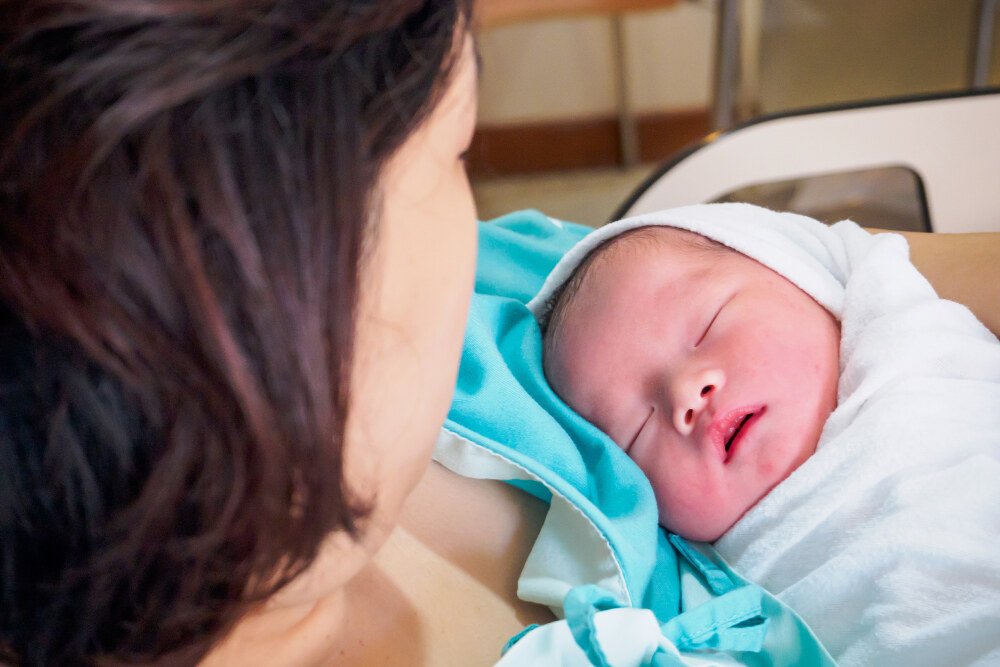
Once your baby is placed on top of you, you don’t feel any pain, as endorphins continue to flood your body. That’s the answer my own mum had given me. “When they place that baby on top of you, you’ll forget everything”.
The third stage:
This is the expelling of the placenta. The organ your body grew to nourish your baby throughout pregnancy is no longer needed. It’s much easier than birth but may take up to an hour.
So my answer is:
I can’t bring myself to say that my birth was painful. I saw it as powerful. It can be intense at the first stage, but that’s just a type of power. The second stage is actually the most enjoyable part! The third stage is the easiest part.
If you are scared, ready to accept anything that will interfere with the natural process, and uninformed of what’s happening to your body, then it will be painful.
I truly believe we need to change the narrative surrounding birth. It focuses too much on the pain. The trouble is, we associate pain with suffering. When we begin to realise and understand that childbirth “pain” is not the same as suffering, we are able to be more accepting that it is simply a part of it. Birth is not about not feeling anything, it’s more about finding tools and techniques to cope with it all.
In fact Mother Nature has worked childbirth immaculately because essentially birth is throwing you at the deep end, if you can get through that, it means you’ll feel strong to look after your newborn. Which is far from easy. It’ll be the hardest, most demanding thing you’ll ever have to do. It’s a tremendous amount of responsibility (so please don’t do it too soon, it is overwhelming and you lose a sense of self). And it’s labour and birth that show and test you on it.
Ultimately the main focus and narrative we need for birth is that “There is a secret in our culture and is not that childbirth is painful. It’s that women are strong” quote by Laura Stavoe Harm.
Luana Thomas is the founder of www.getoffmyback.co.uk a platform to help mums-to-be to reduce anxieties and fears about birth. To try and add towards a positive birth experience, that all women deserve. She loves all things pregnancy, labour, birth and motherhood. For more conversations follow @getoffmyback.co.uk