Issue 01: Providing a Safe Space
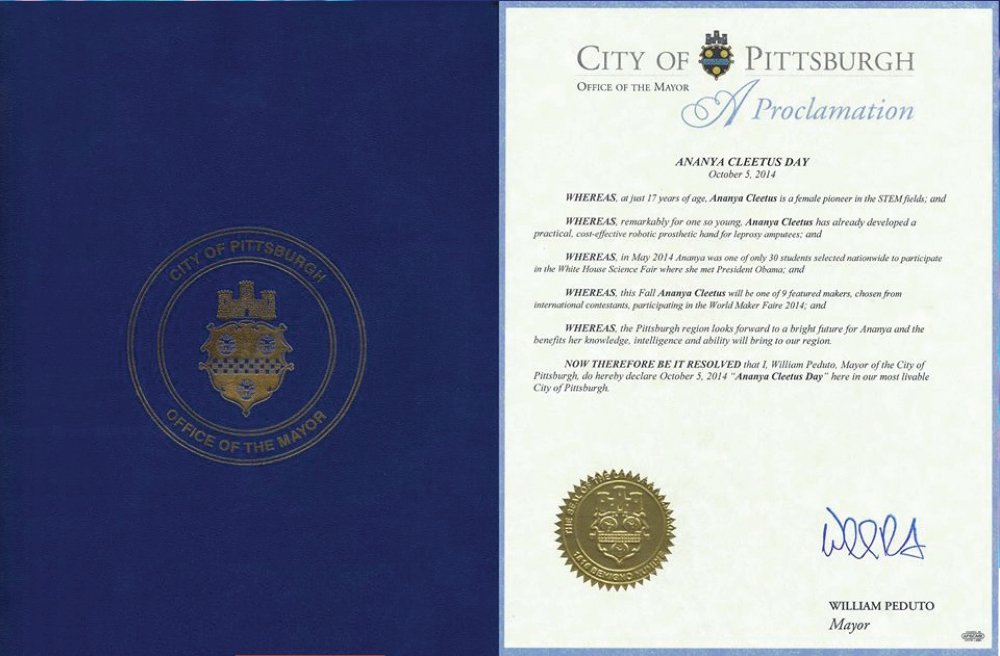
The Cover Girl of our very first issue has every right to say‚ “I’m not Just a Cover”. I talked over messenger with someone I knew as a baby in HK, until she moved to US at the age of 4. Ananya Cleetus developed her own low cost 3D-printed robotic prosthetic arm for leprosy victims in India, and has a day named after her in the city of Pittsburgh. She founded Anemone, a mental health crisis app for people in emergencies, and Magikstra, a Carnegie Science Award-winning social network for high school students to find mentors.
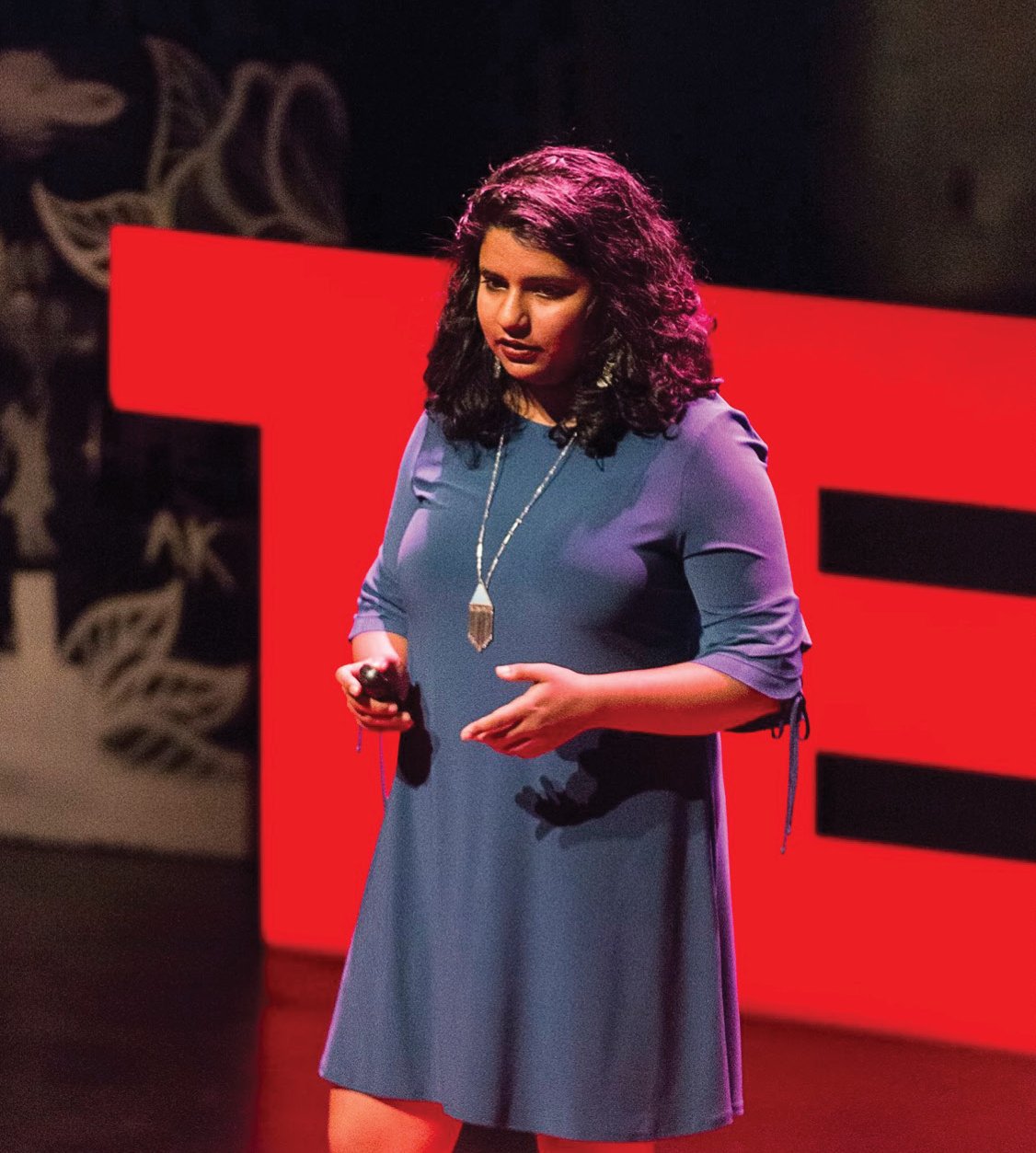
In her free time, she make memes and pecan pies. Ananya is one of the youngest TEDx speakers, being only 22 when she gave her first talk. She currently studies Computer Science at the University of Illinois Urbana-Champaign and interns at Microsoft in Redmond. She teaches a freshman honors course, and helps run Reflections|Projections, the largest student-run technology conference in the Midwest.
This amazing young lady has battled being bipolar since her teens. I asked her to tell us her story.
Thanks so much for taking the time to talk to us and your passion for helping young girls.
Deborah Mannas is talking to Ananya Cleetus.
What or who were your earliest inspirations?
One of them was definitely my dad. He taught me how to build things around the house, tinker with tools, and really have my first experiences with engineering. Another big inspiration for me was science TV shows, especially Bill Nye and the Mythbusters. Even though each episode started with the classic “Do not try this at home” disclaimer, I always imagined myself being one of those people on TV: designing racecars, causing explosions, testing weird theories just for fun.
You are the quintessential third culture kid!
Born in India, your first four years in Hong Kong, and then moving to Louisville, where you grew up! What were the biggest challenges you faced growing up?
I think one of the biggest challenges I faced growing up as a third culture kid was myself. In retrospect, I’m so lucky to have had such diverse childhood experiences and exposures to different cultures, but when you’re in school trying to fit in, it doesn’t feel like that sometimes. I sometime wondered why I was different: why I spoke different languages, why I knew the names of different dishes others hadn’t heard of, why our car played different music in the school carpool line. At first, I felt that those differences isolated me, but now I’ve realized that the cultural background is such a core part of my identity.
How did you deal with them? What support system did you have?
I think the person who really stands out to me is my sister. Despite the fact that she’s younger than me, she is definitely wiser and one of the most supportive and thoughtful people I’ve ever met. Since we moved around a lot earlier in my childhood, she and I got very close just through dealing with some of the changes
What did you find most difficult to talk about as a teenager?
My mental health. As a kid growing up, I was never really taught about mental health or illness through school and most definitely not at home in my Desi family, so it was something I sort of figured out on my own initially. I struggled with depression and general mental health for a big part of my life and never quite knew how to reach out for help. It was a generally taboo subject at home, and at school, a lot of friends didn’t know how to help or how to react so more often than not, they would just ignore it or distance themselves.
For a long time, I blamed myself for feeling different, struggling to stay focused in school, or even having difficulty getting out of bed. I knew a little bit about mental health but still could never figure out what felt so strange. I finally started receiving therapy towards the end of high school, but it took some time for me (and my family) to really understand the gravity of what I was experiencing. It wasn’t until I came to college actually that I got my current diagnosis of bipolar disorder. I also learned in college that this was actually a fairly common experience, especially around mental health in South Asian families and other Asian cultures.
There was an interesting quote I read later on that I think phrases it best: “Depression is like sex. Indian parents think their kids don’t have it”. While the quote itself definitely makes me laugh, it’s also a reminder that something like mental health continues to be stigmatized even more than classic teenage taboos like drinking, partying, and premarital sex.
What made you come up with Anemone and why that name?
Around my junior year of college, my mental health started to seriously decline. I didn’t have a proper diagnosis or medical care at that point and felt too scared to talk to my family, so it all spiraled downwards for me very quickly. I ended up being hospitalized many times during that year and it became a sort of vicious cycle. I ended up having to leave school to take a medical withdrawal for a few years, and during my time off, I had a lot of time to think about my own experiences and traumas from college. I realized that just like me, most people don’t know how to respond to a mental health crisis. As kids, we’re all taught about emergency responses, but they all relate to physical emergencies. If you ask people what to do in a mental health emergency, most adults won’t even know what to say, so how are teenagers and young adults supposed to navigate these situations?
This realization led me to create Anemone, which is a free mental health crisis mobile app that allows users to prepare and respond to mental health emergencies with a fully customizable crisis plan they can share with friends, family, mental health professionals, and first responders. They also have easy access to emergency resources based on their location, as well as national resources and personal contacts. The app also includes popular therapy skills from cognitive behavioral therapy and dialectical behavioral therapy, and a virtual grounding box.
The name Anemone actually initially came to mind from the scene in “Finding Nemo”, but I think it’s very apt because sea anemones in the ocean provide a safe space for fish and other creatures to hide and lay their eggs. My app does the same thing for people and allows them to have a safe space in their phone, no matter where they are.
How long did it take you to create it – from concept to launch?
The app took half a year to create it, from starting with the original idea, research and talking to psychiatrists and therapists, developing the art and design style, coding it, to finally launching it on the App Store. What were the initial reactions when you first launched Anemone? The initial responses were amazing. When I launched the app, I also decided to share the motivation behind it and my own experiences, with friends and family. I received such an outpouring of support for both Anemone and from sharing my own story.
I also was happy to see that a lot of people loved the concept and felt it was such an important problem. While the mental health tech space is growing now, there are not many apps that focus specifically on crises, partly due to how difficult a subject it is to broach. Many people reached out to me on social media as well to share their own experiences with mental health.
How did you influence people to support you?
This one is hard sometimes, especially growing up in a community that would often prefer to sweep mental health issues under the rug. One thing I’ve learned is everyone is in a different place with how they feel about mental health. Some people are more vocal about their struggles or actively involved in treatment or advocacy. Others care about mental wellbeing in a more holistic sense but don’t want to talk about mental illness or crisis situations. And then there are people who refuse to hear it at all, often due to social pressures, stigma, fear, guilt, or even a lack of information. I think an underlying theme that connects all those different sorts of people is compassion though. Everyone may not exhibit it themselves but everyone can understand what it means to be compassionate.
I think an underlying theme that connects all those different sorts of people is compassion
So that’s often something I focus on when working on mental health advocacy on my school campus or even my app. Whether it’s a professor understanding that students are stressed about an exam, a friend realizing that their classmate hasn’t been sleeping well lately, or even self-compassion, it’s an idea a lot of people are willing to rally around and work on.
You did your first TEDx talk at 22!! How did you feel? How did you prepare?
I was terrified to be speaking on a stage in front of hundreds of people, but there was also an indescribable feeling of relief almost when I was able to finally speak in public about my mental health journey. It’s been difficult to come to terms with my own struggles with mental health, but being able to say it out loud was a huge first step for me. Have you ever experienced self doubt? If so, what techniques do you use to overcome them and achieve so much? I have definitely experienced self-doubt, and for me, a lot of the doubt is related to how I see myself doing in the world. Even though everyone talks about how important it is to be able to focus on your own success, that’s a very difficult thing to do. Especially in the world of social media where every new dance move or loaf of bread you share is instantly subjected to likes, comments, and other comparative metrics, it’s hard to tune everyone else out. That same comparison can be helpful though when you realize how fake the world of social media actually is. People post their “highlight reels” for the world but don’t talk publicly about their failures, struggles, and fears. When I feel self- doubt, it’s often because I’m comparing my challenges to someone else’s curated Instagram feed. It’s important to realize that we’re our own harshest critics and will never get a full picture of anyone else’s life but our own. It’s easy to dwell in your own doubts sometimes when you can only see others’ good moments and not their own struggles.
What advice would you give to girls who are struggling to understand what the future holds for them?
I would say, don’t be afraid to try things out. You will never understand a new field or realize a new passion unless you actually try those things first. It’s hard sometimes to want to explore when there’s so much pressure to follow a traditional life trajectory and have instant success, but don’t let those nagging interests or dreams remain unexplored. It’s important to find what you love, even if it means trying 10 other things. Especially as girls, there’s sometimes pressure to follow the same typical career path or focus on the same subjects, but please don’t be scared to choose something new. Worst case scenario: you’ve wasted some time, best case scenario: you’ve found your true calling.
What advice would you give to girls who are struggling to cope with the myriad pressures and challenges that girls face from every direction?
Remember to take care of yourself first. As girls, there will always be so many challenges and pressures from others, some of which we’re taught to take in stride. Many of us are also taught to prioritize others and be a caretaker or support to others. Self-compassion and self-love are honestly so important though and even more so now with everything that’s going on in the world. There’s no shame in taking care of yourself or letting yourself rest. It’s sort of like the safety training you hear on airplanes about oxygen masks. You have to help yourself before you can assist others.
What would you say to your teenage self, looking back 10 years?
I would tell myself that I’m not actually alone, even though it seems like it. Mental illness by nature is such an isolating issue sometimes, and especially in the Indian community, I always felt like I was alone. It was only when I came to college that I realized that there were so many people in my shoes, who also all feel alone.
If you had a vision for girls the world over, what would it be?
I would love to see more girls involved in starting projects and companies and getting resources and funding for their ideas. Girls have the potential to create so many new inventions, resources, and projects to help their communities and the world, but it makes me sad to see that such a small percentage of money and support go to girl-led initiatives all over the globe.
Check out these links if you want to learn more about Ananya, her app Anemone, or listen to her TedTalk!
https://www.anemoneapp.io/
TEDx Talk
https://www.youtube.com/watch?v=j5uVK2EDhhU
Carnegie Science Awards
-
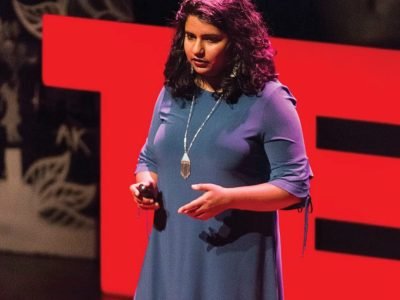
- Ananya speaking at TEDxUIUC
-
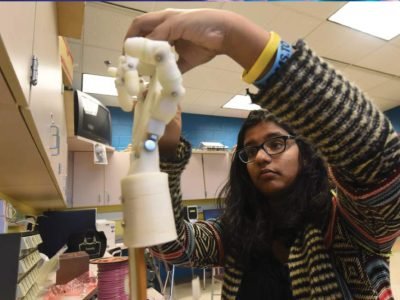
- Demonstrating her robotic prosthetic arm
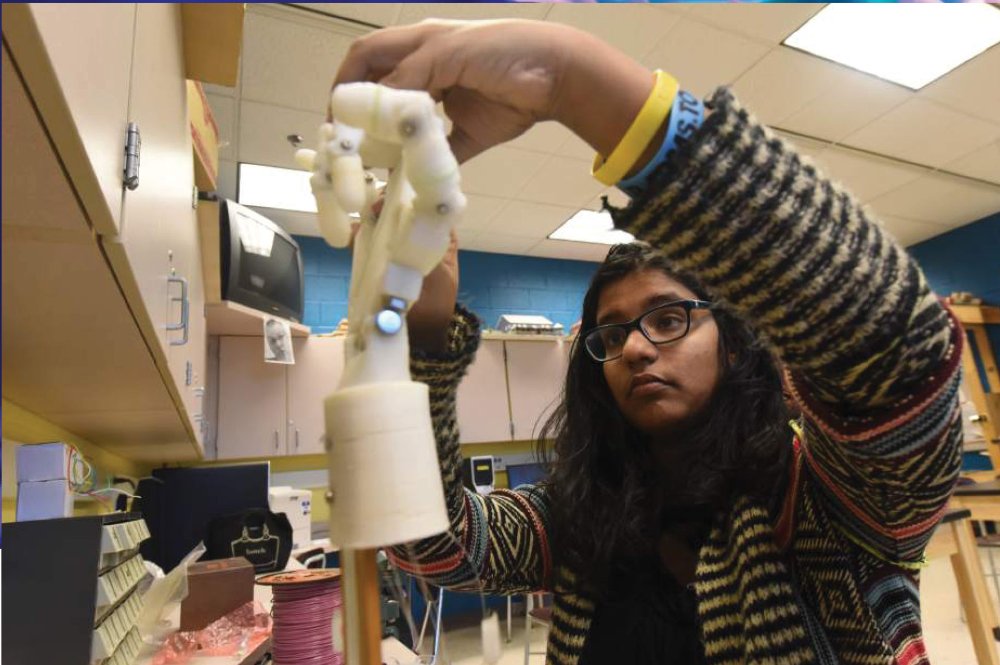
-
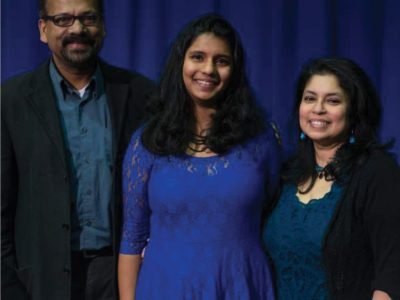
- Receiving the Carnegie Science Award for Start-Up Entrepreneur

-
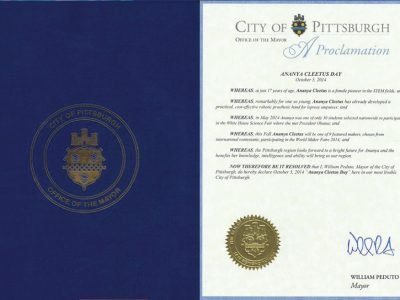
- "Ananya Cleetus Day” Proclamation from Mayor of Pittsburgh