Issue 03: Social Media and Body Image
Social media, a thing we all use every single day. I can’t remember the last time I spent a day without it. It’s a big part of our life. It’s how we connect with the world, socialise with our friends and learn new things. With this being said, I think many of us underestimate the power of social media. Social media has become a tool for brands and influencers to create a false reality of what lifestyle and beauty should be.
I distributed a survey to my social media following, asking them questions about social media in regard to their body image. The survey was targeted at people between the ages of 18 to 22. Out of the 100 people who took the survey, 94% of them stated that they have felt insecure about their looks due to social media. Additionally, I found that the 6% of people who do not get affected by the media beauty standard don’t spend more than 2 hours on social media a day. This could possibly conclude that the length of time you spend online could negatively affect your mental health.
The most dangerous thing about Instagram is when you believe that influencers are ‘real people’ and that they are your peers, because it creates a perceived normality that is completely unachievable. We as young adults are vulnerable to the message that says, “we will be better people if we look a certain way”, and from that we associate a certain appearance with being happy. So, when we can’t attain these standards of beauty, we become unhappy. I remember when the first wave of Instagram models came about, they were so beautiful and perfect. I would ask myself, “why don’t I look like that?”, being completely oblivious to the unrealistic dream they were promoting. Due to this, I even thought I was fat when I was at my smallest weight. It took me till the age of 18 to realise the excessive editing, posing and enhancing that influencers do to distort their image. Following accounts like @celebface on Instagram have been vastly beneficial to my mental health, as they reveal the excessive editing and enhancing that influencers do to the content they post. Social media is making people uncomfortable with their own bodies, but organizations like the Be Real Campaign are striving to change that. They strive to educate young people on body positivity and healthy living. Additionally, the BBC have recommended some beneficial advice. Instead of following influencers and celebrities with heavily edited photos, “finding inspiring landscapes, delicious food, and cute dogs to fill your Instagram feed might just help you remember there’s more to life than what you look like.”
Remember that someone else’s beauty does not diminish your own. At the end of the day, your personality is the reason that people stick around and it’s the reason that people want to spend time with you.
Social media, a thing we all use every single day. I can’t remember the last time I spent a day without it. It’s a big part of our life. It’s how we connect with the world, socialise with our friends and learn new things. With this being said, I think many of us underestimate the power of social media. Social media has become a tool for brands and influencers to create a false reality of what lifestyle and beauty should be.
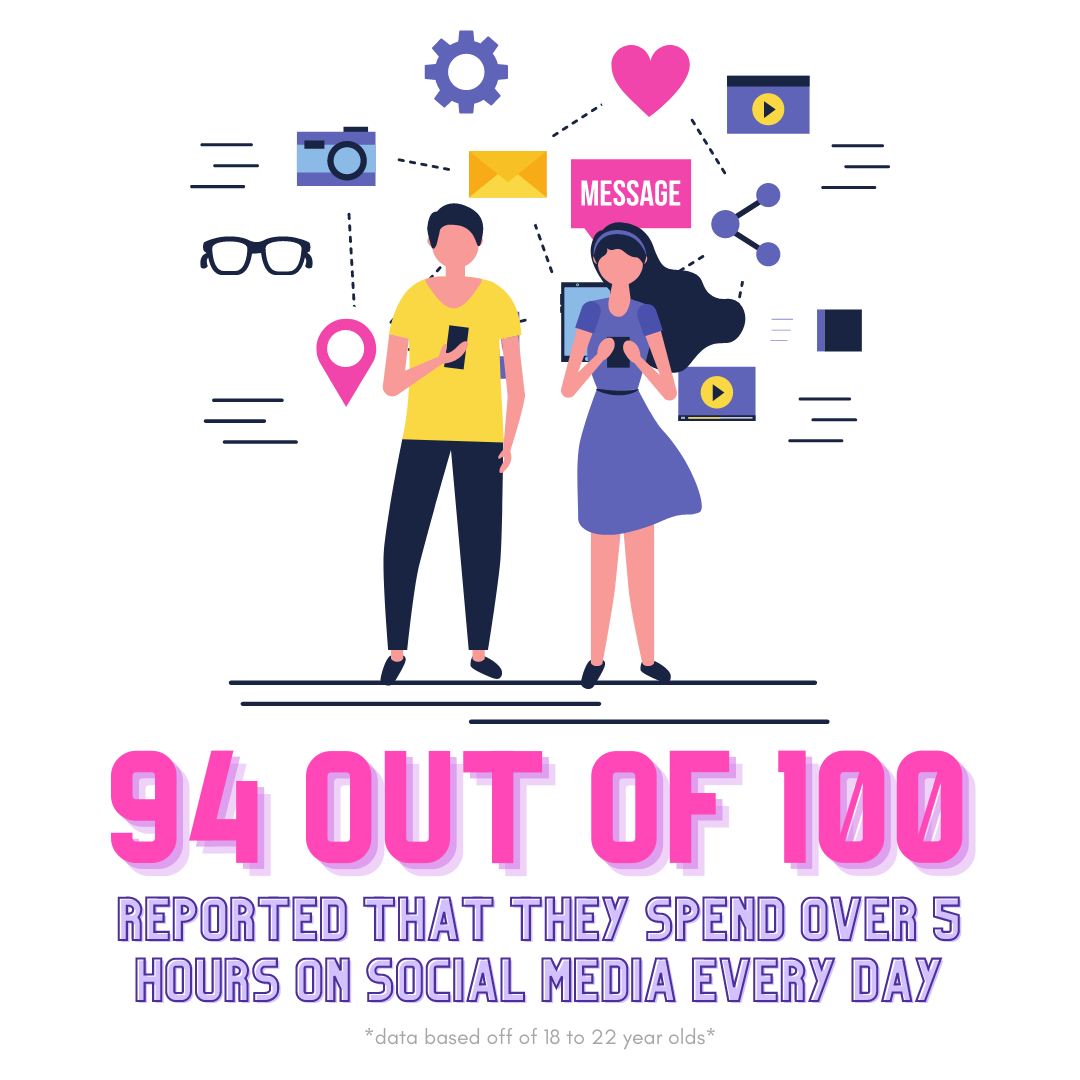
I distributed a survey to my social media following, asking them questions about social media in regard to their body image. The survey was targeted at people between the ages of 18 to 22. Out of the 100 people who took the survey, 94% of them stated that they have felt insecure about their looks due to social media. Additionally, I found that the 6% of people who do not get affected by the media beauty standard don’t spend more than 2 hours on social media a day. This could possibly conclude that the length of time you spend online could negatively affect your mental health.
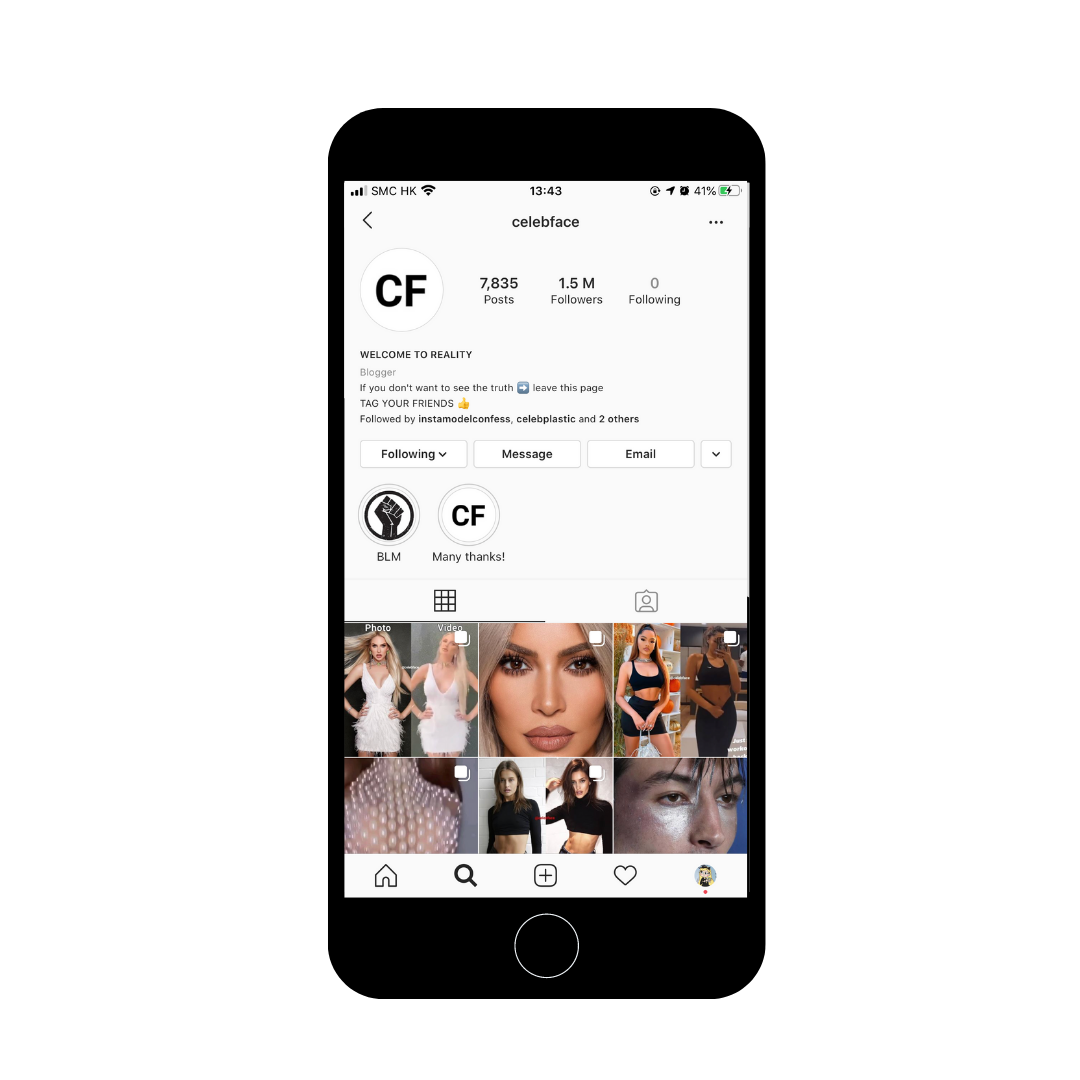
The most dangerous thing about Instagram is when you believe that influencers are ‘real people’ and that they are your peers, because it creates a perceived normality that is completely unachievable. We as young adults are vulnerable to the message that says, “we will be better people if we look a certain way”, and from that we associate a certain appearance with being happy. So, when we can’t attain these standards of beauty, we become unhappy. I remember when the first wave of Instagram models came about, they were so beautiful and perfect. I would ask myself, “why don’t I look like that?”, being completely oblivious to the unrealistic dream they were promoting. Due to this, I even thought I was fat when I was at my smallest weight. It took me till the age of 18 to realise the excessive editing, posing and enhancing that influencers do to distort their image. Following accounts like @celebface on Instagram have been vastly beneficial to my mental health, as they reveal the excessive editing and enhancing that influencers do to the content they post. Social media is making people uncomfortable with their own bodies, but organizations like the Be Real Campaign are striving to change that. They strive to educate young people on body positivity and healthy living. Additionally, the BBC have recommended some beneficial advice. Instead of following influencers and celebrities with heavily edited photos, “finding inspiring landscapes, delicious food, and cute dogs to fill your Instagram feed might just help you remember there’s more to life than what you look like.”
Remember that someone else’s beauty does not diminish your own. At the end of the day, your personality is the reason that people stick around and it’s the reason that people want to spend time with you.